Showing posts with label ranch life. Show all posts

Friday, April 14, 2017

I Can Do It....


It's calving time. Actually, it's been calving time since the middle of February--first the pampered registered princesses, then the first calf heifers--so we've been watching this scene replayed over and over for two months--and this year it's on Cow Cam! We now have a remote-controlled infrared camera mounted in the rafters of our indoor arena/maternity ward. At 2 a.m. we could just stagger out of bed and into the porch to check the cows.

Now we've hit April, the weather has warmed up and the older, commercial herd is calving out in the pasture, where there are fewer germs to share but also so much space that doing night checks isn't feasible. I shove the husband and kid out the door at 6:30 every morning to make the twelve mile trip to the school bus, then I go drive around and check to see what happened overnight. It's sort of like hunting for Easter eggs, poking through the brush patches to see what I can find.


Unfortunately, calves aren't the only thing that's due. The fourth book in my Texas Rodeo series, Fearless in Texas, is supposed to land on my editor's desk by the end of the month and I am not exactly on schedule, so when I'm not wrangling or playing midwife I've been feverishly trying to pry words out of my brain, and reminding myself that I have, in fact, done this before. 

And trying not to be that guy who was recently arrested for taking his laptop out on the front lawn and shooting it. Five times. 

****

Friday, April 08, 2016

The First Step is a Doozy

*

You know what they say, the first step is a doozy.
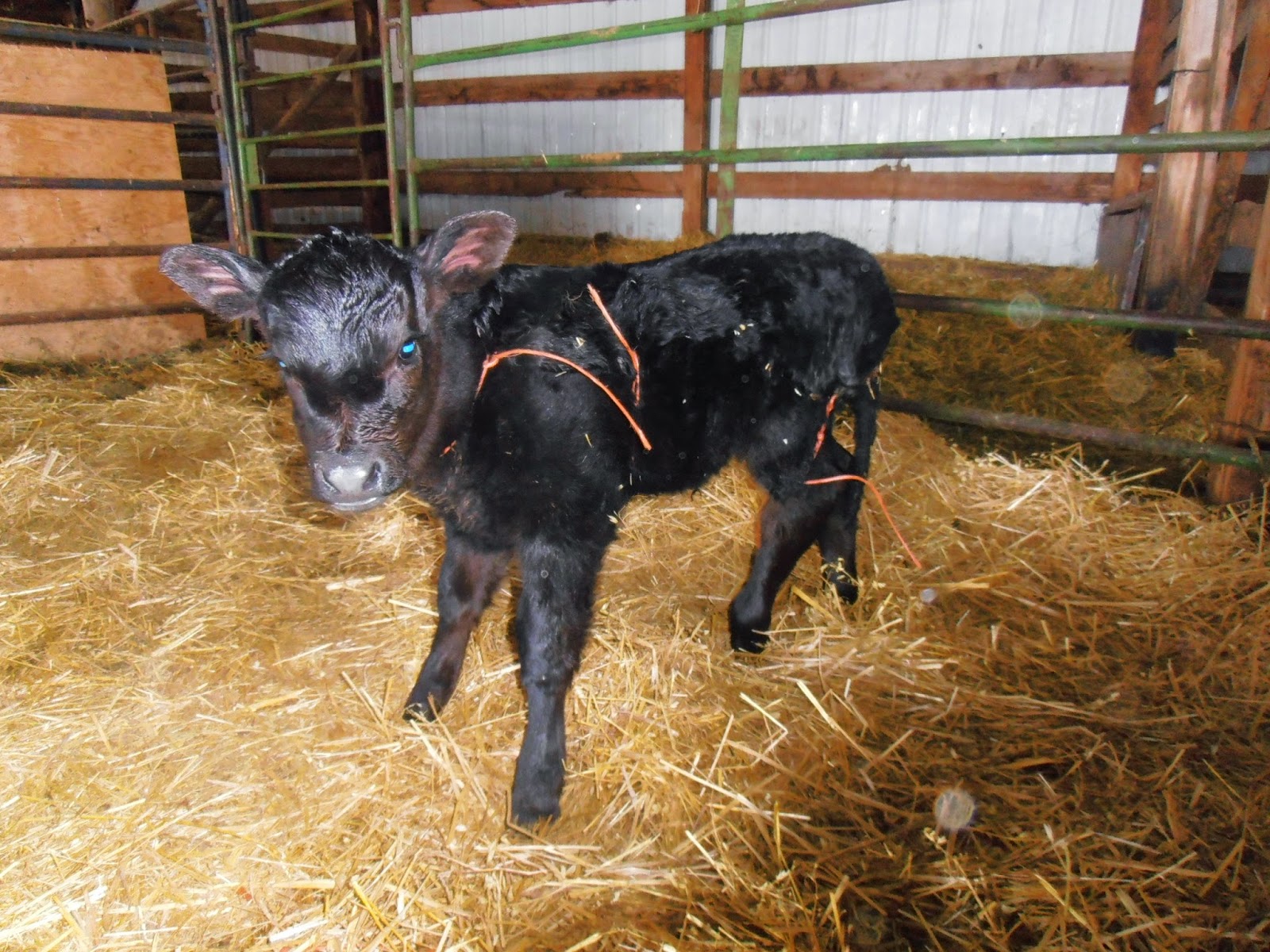
This calf was about five minutes old when the video starts. I cut out all the parts where he stopped to catch his breath between attempts, the original video was fifteen minutes long. He was born breech, which means he was head down, and if you're not Johnny-on-the-Spot to assist the cow by pulling the calf out, they'll usually drown. Even when you are they tend to have fluid in their lungs, so seeing this one get right up and at 'em was fantastic.
I know the birth of a living creature is supposed to be an incredible sight to behold. Personally, I think it's mostly slimy. But this part never fails to amaze me. And to come back an hour later and see him trying to buck...that's downright miraculous.


*

Tuesday, November 24, 2015

On the Mend

November may be fall in most places, but for us it is traditionally the first month of winter. Each year we engage in our annual race to finish any and all maintenance or improvement projects that cannot be done once the ground freezes--driving fence posts, repairing roads, cleaning feedlots--and every year we push it right to the limit. One fall my husband trenched in the plumbing for our new porch in the dark, as the snow fell and the temperature dropped. By morning the ground was frozen solid. The next fall we scrambled to get the foundation for the same porch poured before the weather got too cold for concrete to set properly. (This is a sterling example of the rate at which home improvement occurs around here, by the way.)

This year my husband rented a backhoe for the fall fix-it rush. His last project, again completed as the snow began to fall, was cleaning out the south reservoir. The soil out there is a gumbo clay that stuck in the bucket, then partially froze overnight. Before hauling the backhoe to town he spent most of an afternoon chiseling muck with a crowbar. Then he hauled a few hundred pounds of salt and mineral out to the cows. Then he pitched hay in all of the round bale feeders. The next morning, he couldn't bend his left elbow.

A few days before all this, we got our initial warning blast of snow--the week we all weaned and shipped calves, as per usual. While helping my cousins gather, my horse stepped in a snow-covered badger hole and pancaked, slamming me down on my right side. Thanks to the five layers of clothes that made it nearly impossible to climb on said horse, I bounced pretty well, but it sored my shoulder up enough that for the first few days it was difficult to reach over my head or behind my back.

Yesterday we stopped by the house for a Pepsi break and Greg proudly demonstrated that he is now able to bend his elbow far enough to reach his mouth. He asked how my shoulder was doing.

I said it was much better, and in my usual, high brow fashion added, "We're both doing great. You can pick your nose and I can wipe my butt."


Sunday, October 25, 2015

In Praise of a Good Wreck


My latest latest blog post is available at Progressive Forage Growers, in which I cogitate on all the wisdom I've accumulated from questionable choices:  A Good Wreck.

And while you're there, check out the other blogs. If you enjoy mine I suspect you'll get a chuckle from some of their other humorists.

Saturday, October 10, 2015

Sucking It Up

The trouble with being the person on the ranch with the least mechanical expertise is you get stuck with the jobs that don't require any, especially on the days when there are five pieces of equipment that require repairs and you may have had a hand in breaking two of them. For the record, nobody mentioned I shouldn't tilt the bucket down past level while setting big round bales on the stack, so the broken strap on the grapple fork is totally not my fault. And that thing with the hoist on the grain truck would NOT have happened if my husband hadn't been rushing me.

Basically I get the menial labor jobs, like when big globs of algae/moss grow inside the tank on the water truck and will plug up dozens of nozzles if they're allowed to get into the sprayer. My mission (and nobody asked if I chose to accept it)--clean the inside of an eight hundred gallon tank through an opening the size of a dinner plate.

The answer--Shop Vac, naturally. If you've been hanging around here for a while, you'll know either Shop Vac or duct tape is my answer to everything. (See Of Moths and Madness for one example).

And thus....


So this weekend when you gather 'round for your tailgate party, keep in mind some ranch wife may have Shop-Vacced a water tank so you could enjoy those steaks and burgers.

Monday, May 25, 2015

Adding Some Color

So today we're talking a little roping and a little cowology, and that place where the two meet. First, the roping. The last couple of years we lived in South Dakota, Greg and I did quite a bit of team roping. Then we moved to Oregon and there were plenty of tie down and breakaway roping jackpots to keep us busy, plus we didn't have space for both steers and calves on our two acre plot, so the team roping mostly went by the wayside.

Since we moved home to the ranch we've been trying to get back to it, but for one reason or another we never seemed to have the time. Now I've shed the town job and I have t

wo horses--Bailey and Vegas--who really aren't suited to anything but heading steers. And Greg finally got the heeling horse he's been looking for in Hollywood.

Now's where we get into the cowology. We keep a small herd of Longhorn cows specifically for the purpose of raising roping cattle. But since no one was team roping and the Longhorn bull was a tad difficult to have around, for several years we just bred the Longhorns to our Angus bulls. And because Angus bulls are polled--like most commercial breeds these days--and polled (aka, without horns) is a dominant trait, we had a whole string of Longhorn calves minus the horns.

Last summer Greg decided to change that and took five of our cows down to my cousin's place to breed to his Corriente bull. The result has added a whole lot of color to our herd:


You can also see why Corriente/Longhorn cattle are favored for roping. They're lighter and more agile so less prone to injury, and stay that way until they're three or four years old. Compare the two calves about to the one below, that's out of an Angus bull. Notice how much beefier he is? Also the reason Corriente/Longhorn cattle aren't favored for beef production. Basically, they're too skinny, and it costs too much to fatten them up. Which is too bad, because they never have trouble calving and have a natural resistance to most of the common diseases that make cattle sick. 


But dang, they sure are pretty.

Monday, April 27, 2015

Rock Soup, Duct Tape and Pineapple Pork Chops


It's that time of year--checking fences to see what the wind and the snow have knocked loose or down before turning the yearlings out to pasture.

In the meantime, the latest edition of my mini-mag, Rock Soup for the Cowboy Soul, is hot off the press. And this month it's creeping closer to being a real e-zine, with stories, a recipe and of course, book news. Check it out here:  Rock Soup

And if you'd like to get the next edition directly in your inbox, subscribe here


Tuesday, March 31, 2015

Montana Cliche

I felt like a complete Montana cliche when I went out for my walk yesterday morning, all mountains majesty, big blue skies and eagles circling overhead.


Due to the increasing demands on my writing time, I'm looking to simplify a little, so in the future the stories you used to find here on my blog will be going out in something I call Rock Soup for the Cowboy Soul. I'll post a link to every issue here on blog, or you can hop over to my website to subscribe.

There will be new issue coming out later this week, with the latest fumblings and bumblings from here on the ranch, plus big news on the book front. For now, you can check out the inaugural issue, which features a free, only available here short story: Rock Soup for the Cowboy Soul.


Sunday, March 01, 2015

Take a Number

Each year as calves are born, they get an eartag, which is numbered to match their mother. In the event of a blizzard that separates mothers from babies, we can match them up again by number. Heifers get a tag in the left ear and bulls/steers get a tag in the right, which makes life much easier whenever we have to sort by sex.

If the calf is a heifer that we plan to keep as a herd cow, she'll get a new number when we Bangs vaccinate. (That's brucellosis, for those who aren't familiar. The vaccination is required if the cow is ever to be sold). The first digit of the heifer number is the year she was born. So a 2014 heifer has a 4 plus her mother's root number. Example: Cow 7587 (born in 2007) had a heifer calf last year.

The original calf tag in the left ear is the same as Mom's, 7587, but the daughter gets a second, permanent tag in the right ear with the number 4587. This tells us this new cow was born in 2014 and her mother was 7587, whose breeding history we know. This is important because the decision of whether to keep or sell a heifer sometimes comes down to her mother's productivity and personality. Was she a consistently early calver who never had trouble giving birth? Did she have a lot of milk? Take good care of her calf? Try to stomp us into the frozen ground when we applied the eartag in question? Is she a fence crawler who's constantly out in the neighbor's grain field and took her sweet, impressionable daughter along?


Obviously, the numbering system has limitations. There's only room on the tag for four digits if they're going to be large enough to read from a dozen yards away, out in the pasture. So if cow 7587 had a heifer calf last year and another this year, they would be 4587 and 5587, which is fine. But when 5587 has a calf in 2017 and it's a heifer, it'll be...7587. Assuming Grandma's still around, we have problem. And if 5587 and 4587 both have heifer calves in 2018, if we stuck to the system they'd both be 8587. That's when we have to assign a new number to the third generation and rely on our record-keeping to track her lineage. But since our books are in impeccable order...(cue uproarious laughter from anyone who's ever met us.)

Overall, though, the system works pretty well. Especially when it comes to good ol' 0001, who has a rather unique personality that she seems to pass on to her daughters and granddaughters almost without fail. And it's always good to know that the minute their calf hits the ground, these otherwise docile creatures are going to morph into The Pawing Cow.


~~~~~


For more information on The Long Ride Home and to subscribe to my mini-mag Rock Soup for the Cowboy Soul visit KariLynnDell.com.

Tuesday, February 24, 2015

Earn Your Spurs Podcast

Yep, it's me, yakking again. This time about the history of our ranch, what it's like when your husband is actually the boss of you, and why a writer isn't the world's most reliable employee. There's also a chance to win an ebook copy of The Long Ride Home if you check it out before March 3, 2015.


Sunday, February 22, 2015

An Earful

Three forty-five a.m. this morning, one degree above zero Fahrenheit, I was rolling around in the straw in our indoor arena, trying to wrestle earmuffs onto a hundred pound newborn while his mother wiped snot on the back of my neck.


Yeah, all his little calf friends are probably poking fun at him, but at least he won't end up like big brother, who was born this time last year when it was 22 degrees below zero. 


Sunday, February 15, 2015

A Valentine to Warm a Rancher's Heart


We didn't make any particular plans for Valentine's Day this year, mostly because I'm just back from a four day trip to Tacoma to visit my brother, followed by three nights of kid wrestling practice this week, which means we either stay at our apartment in town or don't get home until almost 9 pm. By Saturday you'd have had more luck stuffing a cat in a bucket of water than getting me in a car to drive at least an hour to go out for dinner. 

Which was just as well, because we got a little Valentine's Day surprise right here at home. We aren't due to start calving for a few more days but these things don't work on a strict schedule. Late in the afternoon my husband spotted one of our heifers in labor out in the lot. Less than an hour later, our first calf of the season was on the ground. And it's a bull! This is particularly good news for us and for him. With the combination of his early birth date and excellent bloodlines, he's already got his spot in our breeding program reserved. 

And so calving begins, and will go on. And on. And on. From now until at least early May. That's over a fourth of the calendar year on maternity watch. 

Believe it or not, we do this on purpose. The bluebloods like this heifer are bred via artificial insemination to calve early. Any later and their male offspring wouldn't mature in time to be herd sires as yearlings. Buying semen from highly acclaimed bulls means we can improve the quality of our herd genetics for less cost than buying well-bred bulls. Plus there's all that excitement every year when the new semen catalogue shows up. Better than back when I was a kid and we couldn't wait until the Sears Wishbook came in the mail at Christmas time. We have around sixty cows in the early-calving herd, a small enough number that if the weather turns brutal we can house all the expectant mothers in our indoor arena. 

Next up are the first calf commercial heifers. These are the non-pureblood two year olds, and they're bred to calve beginning in mid-March, as the registered cows are finishing up. We usually have thirty to forty of these depending on how many cows we culled the year before, and they require the closest supervision because they've never done this before. They're more likely to have difficulty giving birth and less likely to have a clue what to do with that slimy little thing they just pooped out. Unless the weather is spectacular and the calf mothers up immediately, we separate the pair from the rest of the herd for a day or so to let them get it figured out so Junior doesn't get lost in the shuffle and we can tell right away if he's not sucking. 

Then around April 1st the main commercial herd starts calving. This will go on all month with some straggling on into May. By that point the weather is usually warm enough that we leave the cows out in the pasture, these being experienced mamas, but if we do have spring storms all the cows due to calve within the next week or so are brought in and housed in the arena at night where they're under cover and easy to check.

Spreading out our calving this way means we never have more cows due to calve than we have space inside, which has saved untold numbers of newborns over the years. And in case you wondered how we know what cow is supposed to calve when--they all get an ultrasound in the fall and the vet tells us how far along each cow is in her pregnancy. We write down all the cow numbers and days bred and they get a little color-coded button tag in their ear to indicate which cycle they're due to calve. The vet is amazingly accurate, at least twice as good as back when we used to stand in the corral walking cows back and forth and arguing about whether they looked like they might be bagging up. 

As for our little bull, he's up and frisking around today, cock of the walk. We don't usually name our cows, but I wanted to call this one Valentine if it was a heifer. Since it's a bull, a friend suggested he should be Valentino. I like it. Here's hoping he grows up to be a legendary lover. 

If you enjoy what you're reading here, pop on over to my website and sign up for this thing I do that isn't really a newsletter so much as Stupid Stuff that Happened on the Ranch, but my webmistress refused to put that on the button. Subscribe here.

And of course, while you're at the website you can read all about this:


Monday, November 03, 2014

Ranch Wife Workout #73

*

"Take this hammer and bucket of staples and walk the fence down to the end to see where the wires are down."


Yes, this picture was taken today. And sadly, no, it's really not that unusual to have this much snow here in November. Or October. Or September. 

*


Thursday, October 16, 2014

One Way

*

There is a battle raging on our ranch right now. It’s been escalating for years, the turf war between my husband and the badgers, but the past few months it has reached epic proportions.

We've always had badgers. We've always had badger holes. A daily annoyance like foxtails in your socks and that damn west wind. But they went too far with the new corral posts. 

Dad and Greg sweated all one afternoon, digging and setting and tamping eight foot railroad ties until they stood in a perfectly straight row. But the next morning when they went out to hang the gates, one of the posts was leaning like a drunk soldier. During the night, a badger had burrowed down beside it and all but uprooted the post. Irritated, the guys straightened it out and tamped it back into place. The next morning they arrived to find not one but two posts excavated with what appeared to be heavy equipment, leaving a four foot pit around each. The badger was nowhere to be seen, but I assume he was hunkered in a burrow across the coulee, laughing as they shoveled and tamped and swore.

That’s when we got the badger traps.

Trapping badgers is tricky, and requires a lot more strategy than stuffing a trap into a hole. In the beginning, they dug around and under the traps, tossed them out like they were no more than chunks of rusty barbed wire, all the while chuckling their evil little badger chuckles.

Time for the trapper to learn a few tricks of his own.

I’m not going to go into a whole lot of detail in case you just had dinner, but suffice to say my nine year old boy can describe exactly how to extract urine from a freshly killed badger...and why. And last week my husband casually said, “Oh, by the way, my badger bait rots better out in the sun, so I wouldn’t open any of those plastic tubs in the back of the red pickup if I were you.”

It would be simpler if badgers were the only occupants of our pastures. Our trapper takes great care to shove his traps far down the holes, but one can never underestimate how far a cow will go to get into what she shouldn’t.

Which is how we ended up with a cow with a badger trap stuck on her nose. 

To fully appreciate her predicament, I need to explain that the trap was attached to a length of wire wrapped around a four foot chunk of fence post, designed to keep a badger from dragging the trap deep underground. Along comes the cow, innocently shoving her face down a hole for reasons comprehensible only in her little cow brain and WHAM. She fell back, trying to shake off whatever had clamped onto her face, and got the post stuck behind her back feet.

So now she’s got a trap on her face and her head snubbed down between her knees, held tight by wire and the fence post wedged behind her hocks. In other words, this was not a happy cow.

There was nothing to do but rope her. Considering she couldn’t run, it should’ve been simple. Except Greg and my brother in law Richard were both mounted horses that hadn’t done much pasture roping and neither horse had ever seen a cow packing quite that much hardware. After no more than half an hour of kicking and sweating and swearing, Richard got Bailey close enough to toss a loop around the cow’s neck. 

But now she was really irritated. Every time Greg got close to the heels the cow would kick and the chunk of post would fly up, and his horse would jump halfway to the next county. Plus how in the heck do you heel a cow with a post in the way?

Finally, she gave a mighty kick, snapped the wire and sent the post flying. Greg rode in and snagged both heels. Richard tightened up his end of the rope and hopped off to remove the trap. Bailey, being new at this and not particularly loyal to begin with, took Richard’s dismount as a sign it was time to go home, but when he turned to leave the rope touched his butt and he blew up and went to bucking around in a circle at the end of the rope. Richard had to dive for cover or be clothes-lined. Greg’s horse whirled and tried to bolt, but Greg held tight to his dallies, managing to stay a jump ahead of the bouncing, snapping rope attached to Bailey's saddle. And somehow, in the midst of the wreck, the neck rope snagged on the trap and popped it off the cow’s face.

The cow stopped bellering. Bailey stopped bucking. Richard climbed to his feet, dusted himself off and got his rope off the cow’s neck. Greg released the heel loop. They all watched her wander off, shaking her head as the horses and men gathered up their gear and frayed end of their nerves.

“Well,” Richard said. “I guess that’s one way of doing it.”

*

Tuesday, September 23, 2014

Happy Equinox


*

We're in the process of moving cows to fall pasture, which for the most part includes hay and grain fields where they can fatten up nicely on the leavings. We are straight dryland farming, only one cutting of hay, so whatever grass and alfalfa grows back after swathing and baling becomes feed for the cows. This year we had a hail storm that came through and knocked a lot of heads off of the grain, which then sprouted and grew, leaving behind what looks like a lush lawn as the combine passes. We're gonna have some very happy cows when they come in from the south lease next week. 


Unlike our poor, abused ranch horses, who are apparently unable to survive on acres of green pasture. They have to climb the manure pile and pick used oats out of the straw.


*


Monday, September 01, 2014

Pop Quiz

*

Guess which of the days in the forecast below is the one we're scheduled to spend all day at the corrals, pregnancy testing cows?


Looks like it's time to dig out the long underwear and the Muck boots. 


*

Saturday, June 21, 2014

The Bog Blog

*

We are lucky enough to live in an area where there are few true natural hazards. We don't have earthquakes, the chances of a tornado is low due to our proximity to the mountains, and we harbor no venomous snakes...as far as we know. We don't even have poison ivy.

What we do have are soap holes.


A soap hole is a spring that rises up in a particular kind of soil. Maybe one of you soil specialists out there could tell me exactly what it is about this white dirt that results in the formation of these bottomless wells of soupy, slick mud into which an animal can fall and never emerge, because when they try to crawl out the sides just collapse and they slide back in.

Worst of all is if a horse goes into one. We don't have any soap holes in our horse pastures, but an unsuspecting visitor once rode into one, and the horse couldn't begin to get out. After a few tries, he just gave up. One of the other riders broke out a rope, managed to toss it around the saddle horn, and they dragged him out, but then almost lost him to shock. Over the years, we've learned to warn outsiders what and where to watch for these death traps. 

And they're tricky. In dry weather the top crusts over and looks like solid ground, so a cow or calf will wander out onto it only to break through and sink. We put the tires around the edges to mark them, and you'll notice it's swallowing them up. There are countless more already at the bottom. We've tried fencing them, but they contract and expand based on how much moisture we get in any given year, so sometimes they eat the fence, too. 

Luckily, most of the time what falls in is able to get out, with nothing worse to show for it than a coating of nearly impermeable mud that they'll be wearing for days. And if there are some that don't...well, since all of our soap holes are clear out on the south lease, that's a cow or calf that goes missing and unaccounted for because unless it happens as we're trailing cows, we don't see it happen.

Given the price of cattle, we're going to be fencing the holes again this year. Unfortunately, even a good solid barbed wire fence wouldn't stop certain critters from venturing where they shouldn't. Good thing Max can swim. Now to toss her in the reservoir and get rid of the mud before she gets in the pickup for the trip home. 


*

Sunday, June 01, 2014

Still Kickin'

*

Yeah, it's been a while. Life sort of gang tackled us in the past month, the way life will do on a ranch. We've had cows to artificially inseminate and bulls to fertility test, and consider yourself lucky that I'm not sharing details or photos of either. Then there's branding and trailing to pastures and pondering which bulls should go with which bunch of cows, and oh, yeah, how 'bout all those fences the drifting snow knocked flat?

And somewhere in there, we do a little farming. And oh, right, on top of all of that? I'm in the process of training my replacement at my town job, which is requiring me to all of the sudden stop and explain all those million and one things you normally do at work without really thinking, and let me tell you, that much thinking pains me considerably. Not to mention the part about having to talk to people all day, when I'm used to just hiding back in my little billing office, safely away from the public eye.

Times like this, you sort of wish you didn't live in the place where it stays daylight until 9:30 pm, cuz that working 'til dark can damn near kill a person. Notice I didn't mention anything about starting at daylight. Morning people we are not, and if a person's gonna be self employed, they oughta at least get to choose what time they go to work in the morning.


In the meantime, though, my newspaper column does go on, so I do have a story to share. Here's one about our branding crew:


***

Just Don't Shoot the Banjo Player

Over time, we have accumulated a rather motley collection of acquaintances and relatives, as one does. Our collection is a touch more diverse, due to our family's propensity for rodeoing and dragging home strays from all over the country. Plus the younger generations have moved around a lot and married people from 'away'. Plus I've become involved with writing and an arts festival that brought me into contact with performers from here and there. Plus there's this exchange program that brings young people from countries like England, Sweden, Norway and Australia to work for six months at a time on local ranches.

All of that is to explain how we ended up with all of this descending upon us for Memorial Day weekend:

First off, let it be clear that there is no holiday involved. We will be branding calves, the main herd on Saturday and a smaller bunch on Sunday. This requires gathering up a crew, which consists of friends, neighbors and family, whom one might rightly expect would be a solid cross section of native Montana ranch stock.

Yeah. Not so much.

First there's my husband, the pride of Bath, South Dakota. My cousin to the east will bring her husband, who is a former Highway Patrol officer and native of Long Island, New York. My cousin to the west will bring along his wife Charlotta, who is a native Swede but speaks four other languages. They'll also bring their current exchange worker Mitchell, who hails from New South Wales, Australia and speaks something none of us can understand unless enunciated slowly. He sports shoulder to wrist tattoos and sleeveless muscle shirts to show them off, which is fine by me because the tattoos are beautifully done--and so are the muscles.

So much for the locals. Next we have my sister and her two kids, who planned to pop over from Spokane for the weekend, except it got a little more complicated because my brother is currently deployed at what I swear he told me was a place called Skank in Afghanistan, and his wife was depressed about being home alone for the long weekend, so she's loading up her four boys and driving over from Tacoma to meet my sister and come to the ranch. Did I mention my sister in law is a native of the Dominican Republic, and Spanish is her first language?

Into that mix toss a bluegrass banjo player from the Flathead Valley who comes around two or three times a summer to practice his target shooting while helping to rid us of our constant infestation of gophers. Yep, we have the makin's of quite a crew. Or a backwoods version of the United Nations, except with varmint guns.

I starting counting heads and beds and meals and said, "I'd better make a run to the grocery store."
My husband started calculating how many shooters he was going to have on hand and said, "I'm gonna need more ammunition."

And then he looked at me and spoke the immortal words of redneck party planners everywhere: "You get the beer, honey, I'll get the bullets."

It'll all be good as long as nobody shoots the banjo player while he strums the theme from Deliverance in the background.


*

Sunday, March 30, 2014

Weekend with Bernie

*

Back in the eighties there was a movie called Weekend at Bernie's, in which a pair of corporate-climbers drag their dead boss around a weekend house party pretending he's alive so his ill-timed demise doesn't mess up their shot at networking with the bigwigs. Or something like that. I don't recall the finer points, assuming there were any. I mention this because I had a similar experience last weekend, except with a calf.

And why, you ask, would I spend two days dragging a dead calf around? Well, it's like this...

The calf--we'll call him Bernie for simplicity's sake--was born out in the west pasture, on a ten degree blustery morning, which would have been enough of a challenge. My husband spotted him right away, though, loaded him in the pickup and hauled him in to the calving barn, where we put him in the warming box. He should have been fine.

It was immediately obvious that Bernie's prospects were not good. There was blood in his saliva and he couldn't hold his head up. Probably premature. But we dried and warmed him, filled his belly via a feeding tube, closed up the box and hoped for the best.

Have you ever heard the story of Schrodinger's Cat? A physicist theorized that if you put a cat in a box with a dish full of poison, then close the box, you have no idea at what point the cat will eat the poison and die. Therefore, the cat can be considered both dead and alive until the box was opened and the cat seen to be dead. They call this a paradox. Whatever the purpose of Schrodinger's theory, Bernie was my cat in a box. And I really didn't want to open the lid, because until I did I could pretend he was still alive.

But sadly, no.

In the meantime, two pens away, we had a calf without a mother, one of a set of twins. Twins are great, except it's rare for a cow to have enough milk to raise both, especially a first calf heifer, so we have to take one off the mother and bottle feed it until another cow becomes available. I took to calling the calf Marvin, short for Starvin' Marvin, because he was a bottomless pit and no amount of bottled milk seemed to fill him up.

So, in one corner we have poor Bernie, recently departed. In the other, Marvin, in need of a cow of his very own. And clear out in the pasture, Bernie's mother, mourning her missing calf. The obvious solution is to bring Bernie's mom in and give her to Marvin. The trick is to convince her to leave the spot where she last saw her calf, and where instinct insists he's most likely to appear again.

Enter the calf sled.


The idea is to load a calf into the sled, let the mother get a good look and sniff at him, then slowly pull the sled to wherever you want the cow to end up, while she trails along following her calf. Works like a charm most times. Then again, most times the calf is alive. But we hoped we could fake Bernie's mom out long enough to get her to the barn. 

So I hoisted Bernie's limp body out of the warming box, loaded him in the sled, tied it onto the four wheeler and took him for a nice ride out to the pasture, where I propped the sled up on its side and arranged Bernie so he looked reasonably perky. The cow sidled up, sniffed. I held my breath. It was going to work...

And then she licked him and the sled tipped over and Bernie flopped out onto the ground. The cow took off running. I dumped Bernie back in the sled and roared off in pursuit with Bernie bouncing along behind. My husband joined the chase and much to our astonishment, the cow trotted the half mile straight over to the house and into the barn, possibly due to the shock of being attacked by Zombie Bernie. 

Phase one, complete, if not quite how we had planned. 

We stashed Bernie and his sled in the corner and left the cow locked up for the night to give her time to settle down. The next morning, we initiated phase two. The part we really don't enjoy. And given that I spent an afternoon giving sleigh rides to a dead calf, that's saying something.

Here's the deal. Cows are wired to let only their own calf nurse. Otherwise, it would be a free for all out there in the pasture, and the smallest calves would starve. Cow recognize their calves by scent and will kick at anything they don't recognize. So if we wanted Bernie's mom to accept Marvin as a substitute, we had to make Marvin smell like Bernie. 

In other words, Marvin needed a Bernie suit. (Which always makes me think of Men in Black. "...not Edgar, exactly. More like somebody wearing an Edgar suit.") 

There's something very disturbing about skinning a baby calf, even for a good cause. In Bernie's case, it proved to be damn near impossible because the temperature had dropped into the teens overnight and he was frozen stiff. Another ride in the sled, back to the warming box, where we left him to thaw for a few hours. But finally, late on Sunday afternoon...


Yep, that's Marvin, all dressed up to meet his new mommy. Who adores him, thank the Lord. After three days, his scent and Bernie's had co-mingled to the point that the hide could be removed without the cow realizing this wasn't her natural born child. So she's happy, Marvin is thrilled and--for the first time ever--full. And Bernie got one last ride in the sled, to the place out back where the less fortunate go for their final rest.

As much time as we spent together, it seemed like a eulogy was in order, but the best I could come up with was, "Here's to Bernie, who always stayed right where you put him."  

*

Friday, March 28, 2014

An Ear-ful and an Eye-ful

*

We got a couple sets of the real, store-bought ear protectors. It might be less humiliating to have stubby, frozen ears.


You gotta wonder what that cow is thinking when she's looking at this. 

*